Windows & surfaces
Windows, bay windows and surfaces without a single streak.
Learn more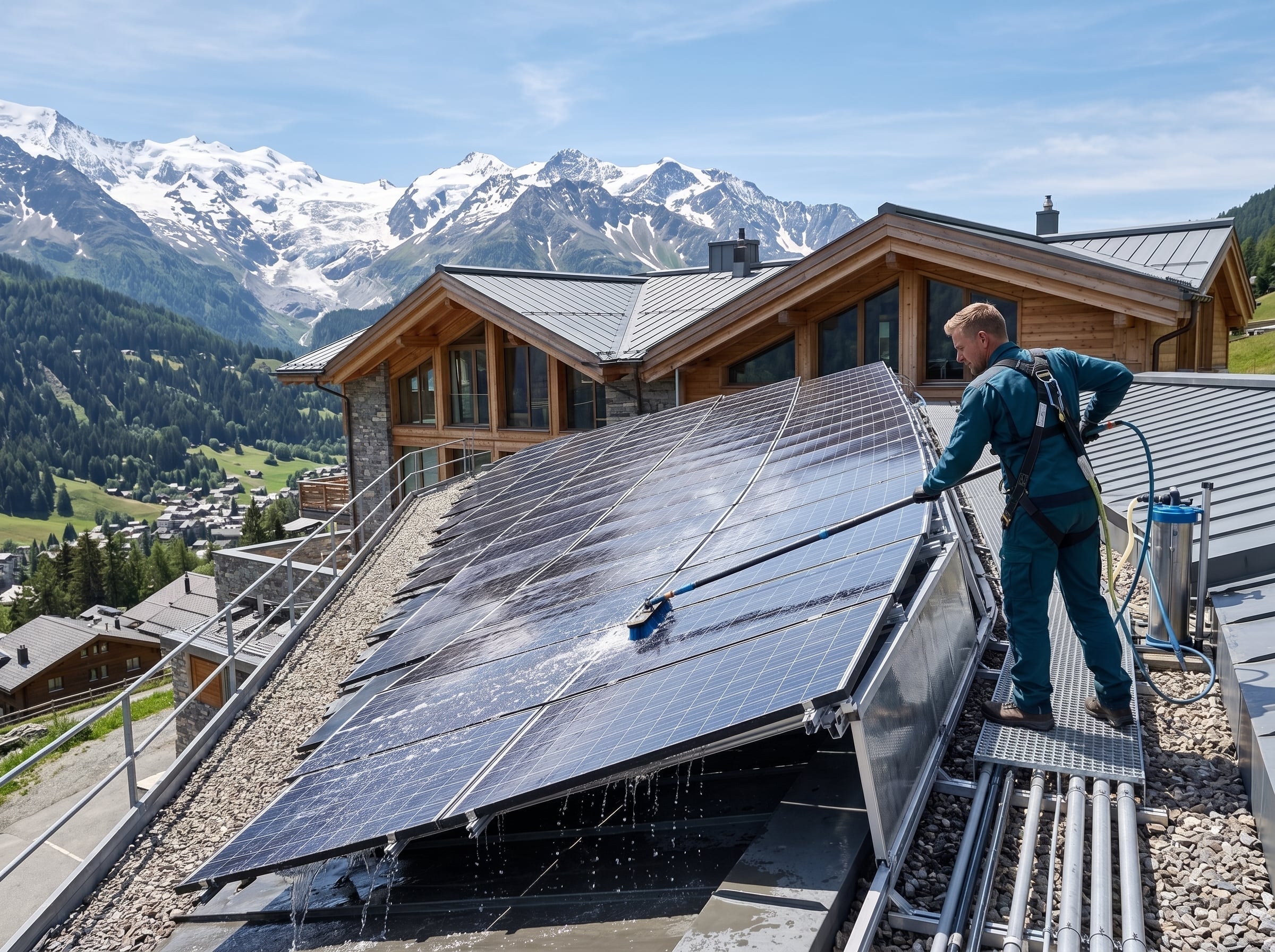
Conifer pollen, limescale from meltwater, soot from wood heating: your photovoltaic panels lose output long before it becomes visible. We wash them with pure demineralised water, scratch-free, from the Albertville basin to the shores of Lake Annecy and up to the ski resorts.
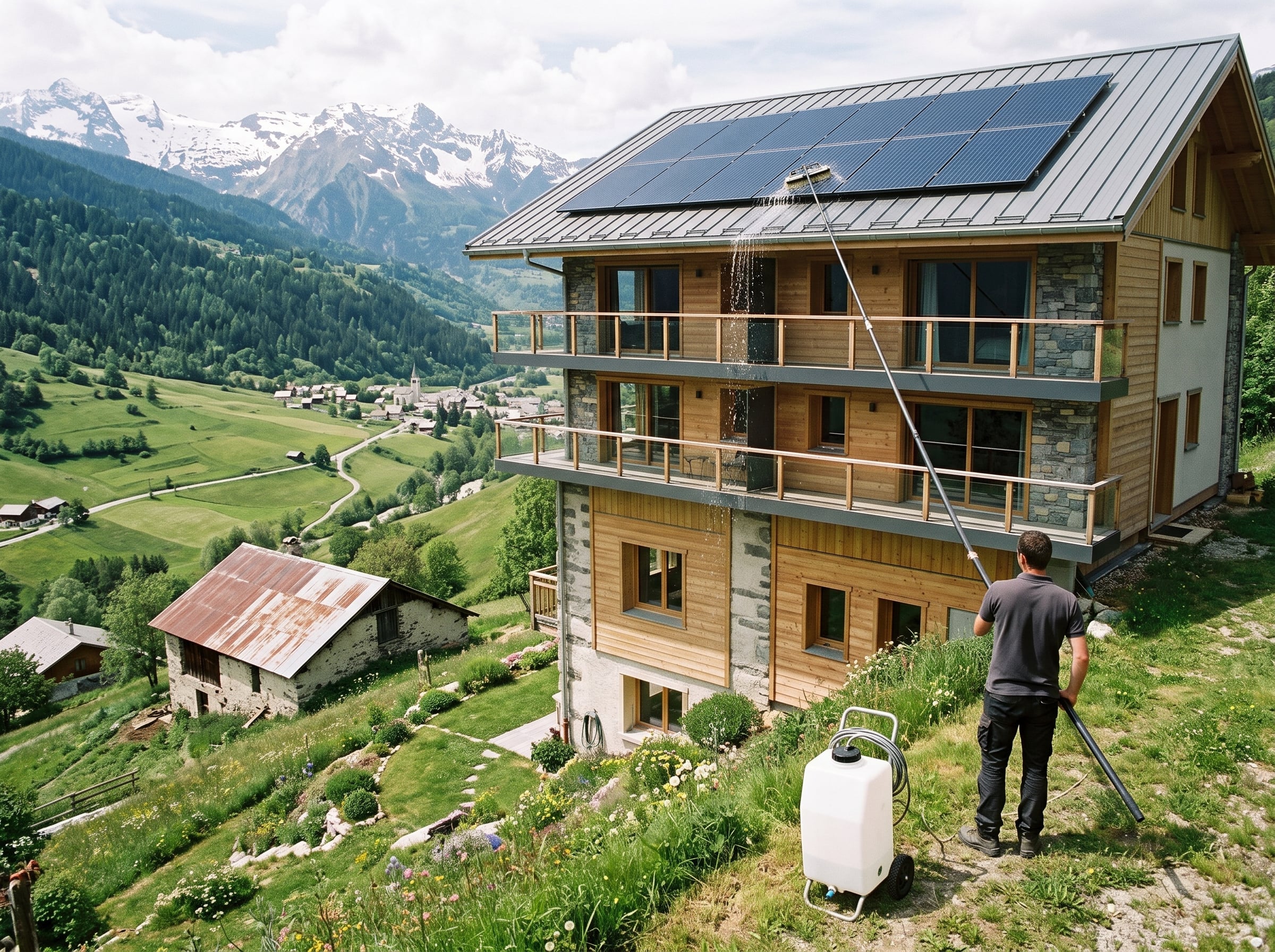
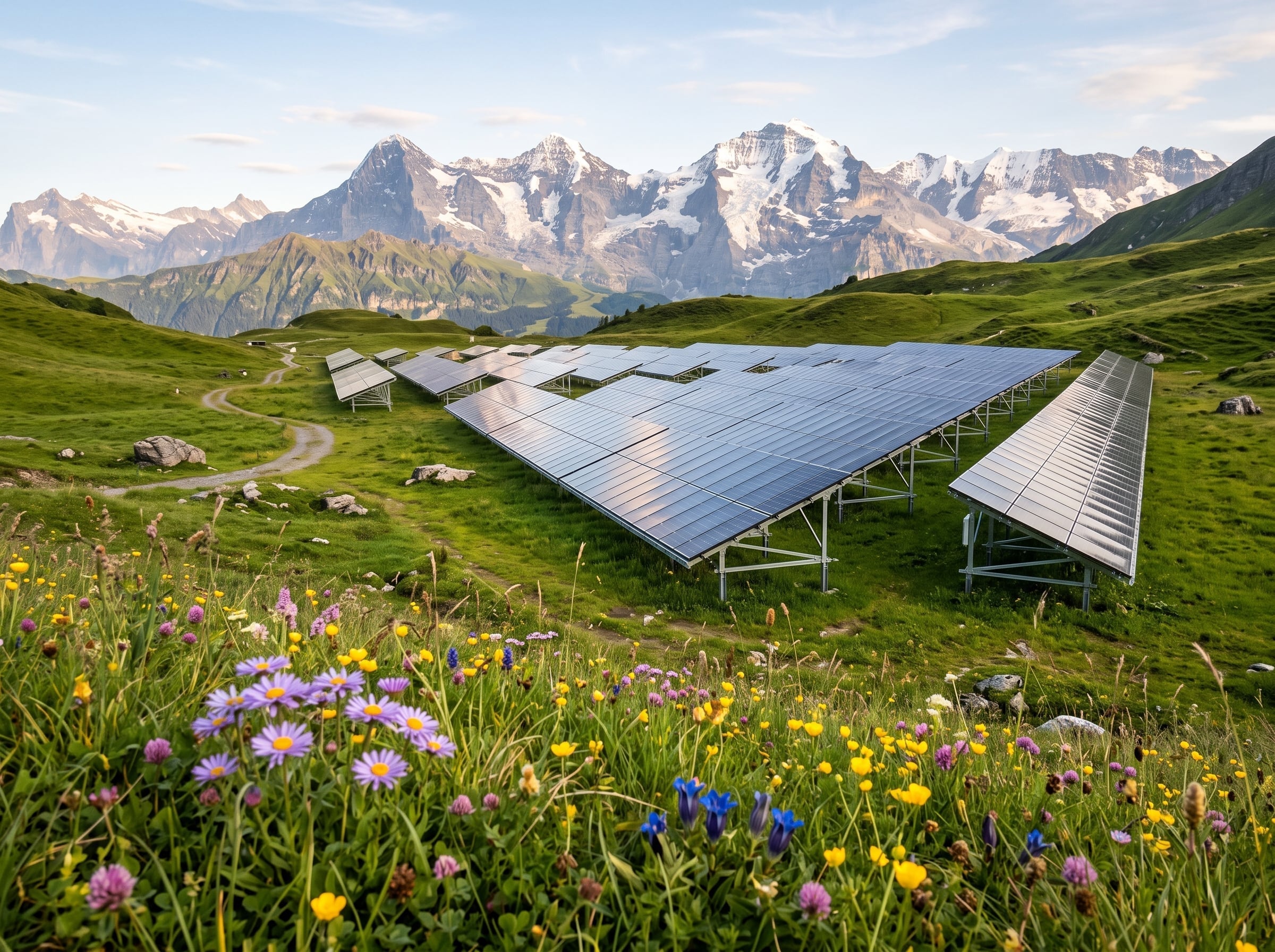
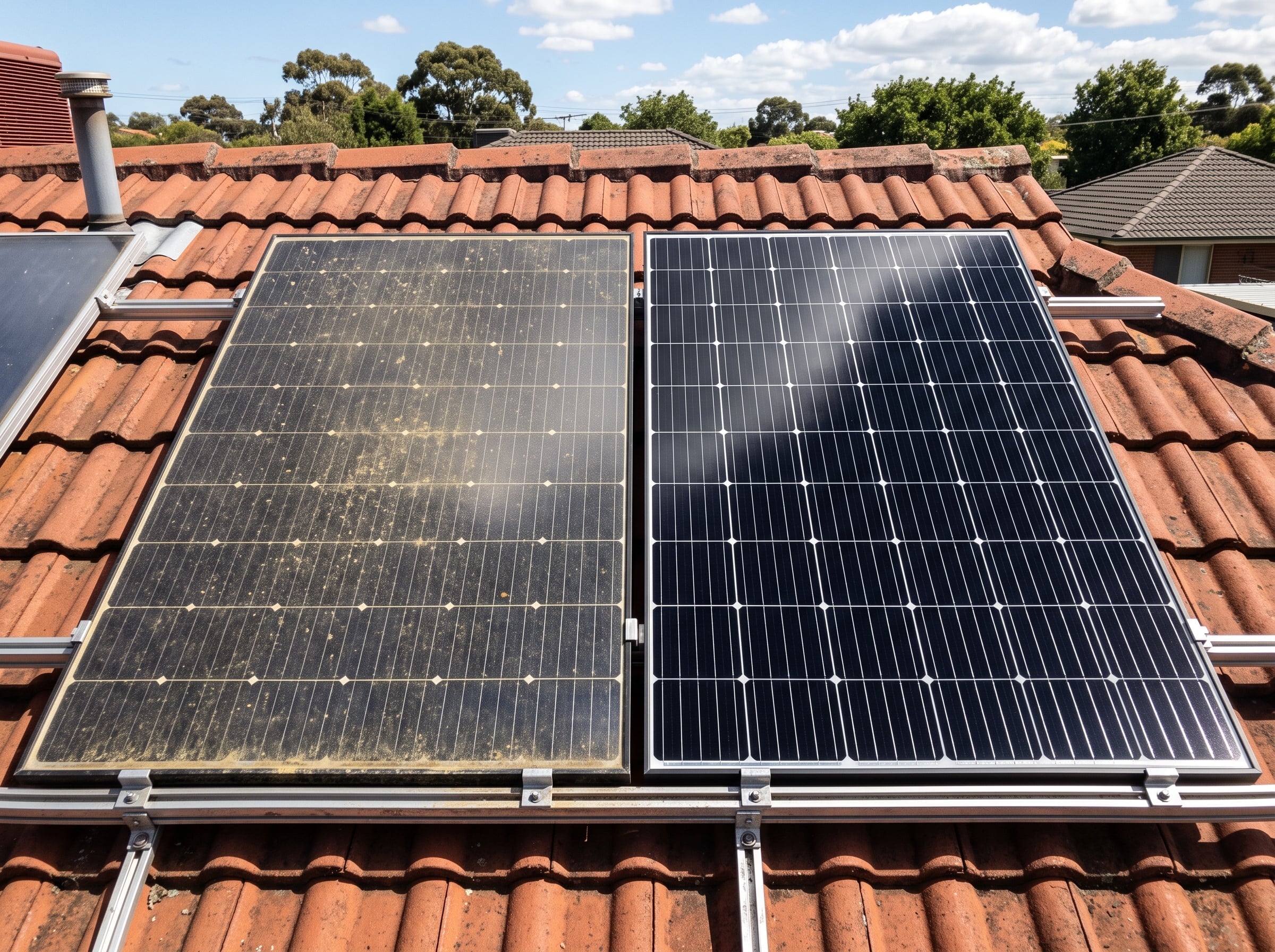
A Savoyard installation does not collect the same deposits as a lowland roof. In spring, the wooded slopes of the Semnoz, the Bauges and the Beaufortain release an oily conifer pollen that sticks to the glass and that rain does not lift. In winter, snow melts more than it washes: as it slides it leaves behind limescale from the massifs, pine needles and soot from wood heating, and the night frost sets the lot. Along the N90 and at the bottom of the combe, dust from building sites and passing lorries add a grey veil you only notice when two modules sit side by side. We wash these installations with demineralised water, at low pressure and with no detergent, using a soft brush, from the ground with a pole when the pitch and the access allow it, and on the roof the rest of the time. Our base in Ugine opens onto three very different areas: the Albertville basin and the Combe de Savoie, the lake shore up to the val de Chaise, then the resorts of the val d'Arly, of the Beaufortain and of the high Tarentaise.
Here most installations sit on tiles or steel sheet, between 300 and 700 metres of altitude: houses on the slopes of Mercury, Marthod and Pallud, converted old farmhouses in Venthon and Allondaz, barns and sheds in Grésy-sur-Isère and Frontenex, company roofs in the Gilly-sur-Isère business parks. Three things soil them, in this order: woodland pollen in spring, dust raised by building sites and valley traffic the rest of the year, then moss creeping along the lower edge of the modules on shallow pitches. We are ten minutes from Albertville and five from Marthod: a visit slots in between two rounds, with no travel charge, and comes back at the same time every year.
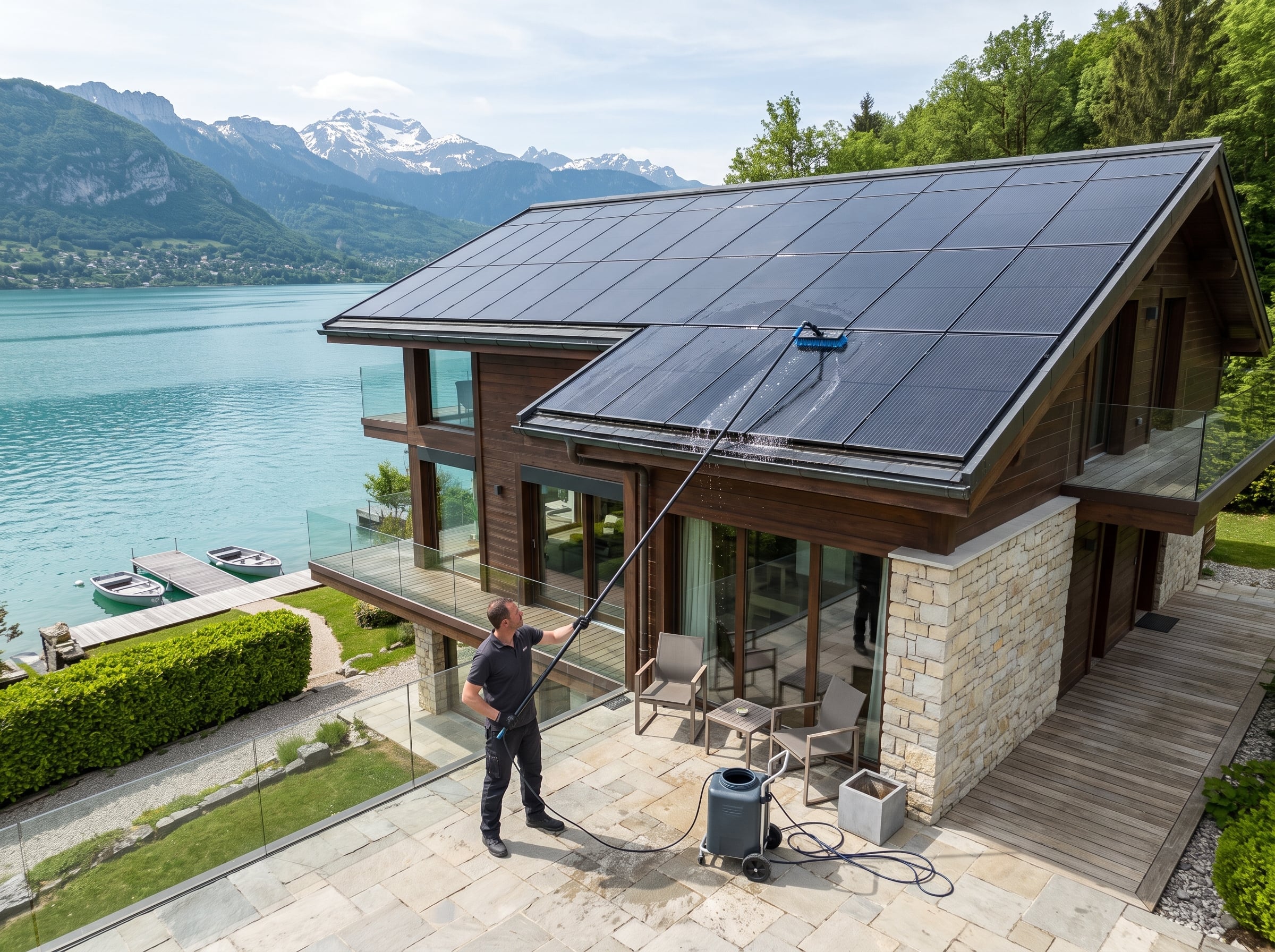
Between Saint-Jorioz and Faverges, installations are recent and often invisible from the road: modules built into the roof, solar tiles, south-facing pitches above the water. The air stays damp much of the year. Morning dew dries into limescale rings, pollen comes down from the Semnoz and the Tournette slopes from mid-April, and birds from the reed beds mark the modules closest to the shore. Many of these houses are only lived in part of the year: we come before the owners arrive, in May or early July, and send photos of the roof after the visit. Doussard and Lathuile are twenty minutes from the base, Saint-Jorioz thirty.
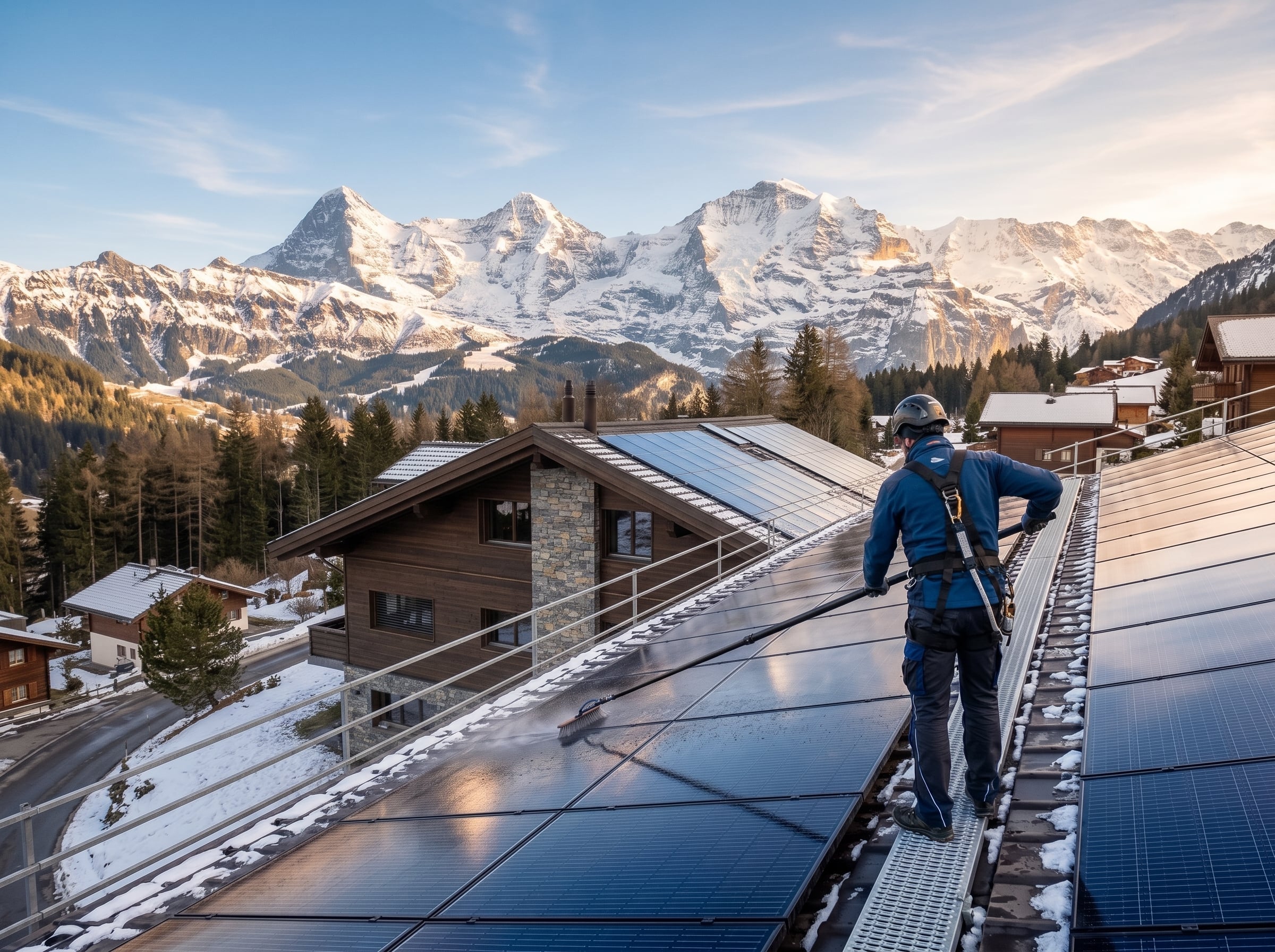
Above 900 metres the calendar changes. An installation in Crest-Voland, Les Saisies or Megève spends the winter under snow, then comes out in spring with a deposit nobody expects: limescale from meltwater, needles from the neighbouring firs, soot from the hamlet's wood stoves, and the marks left by freeze and thaw cycles. On top of that comes far harsher radiation than in the valley, which bakes the grime onto the glass. We work in the two windows when the roof is clear and reachable: from mid-May to the end of June, then from September to mid-October, before the first snow. That is also when rental chalets stand empty.
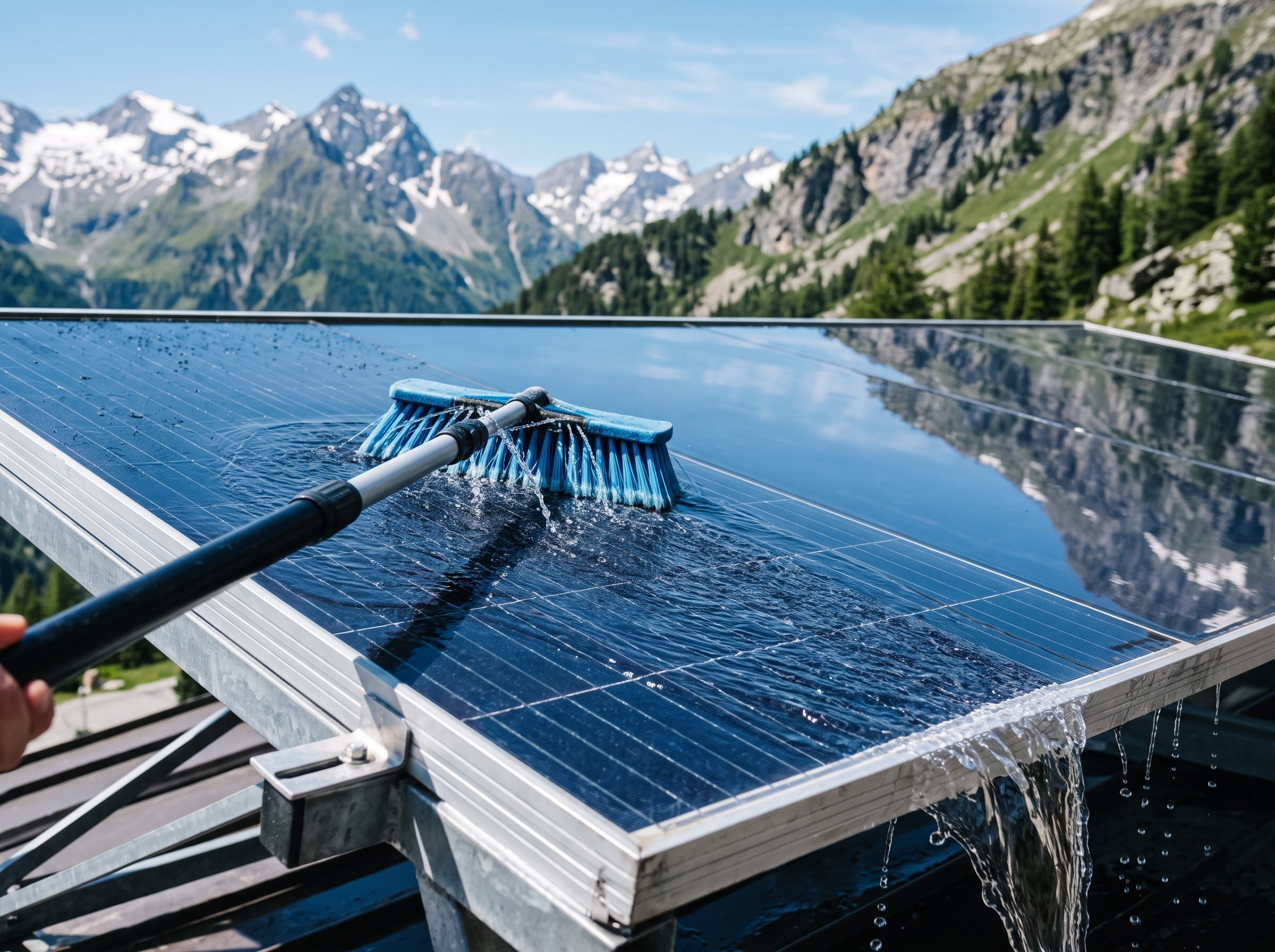
Filtered, demineralised water with no chemicals at all: it dries on its own, leaving no streak or residue on the glass.
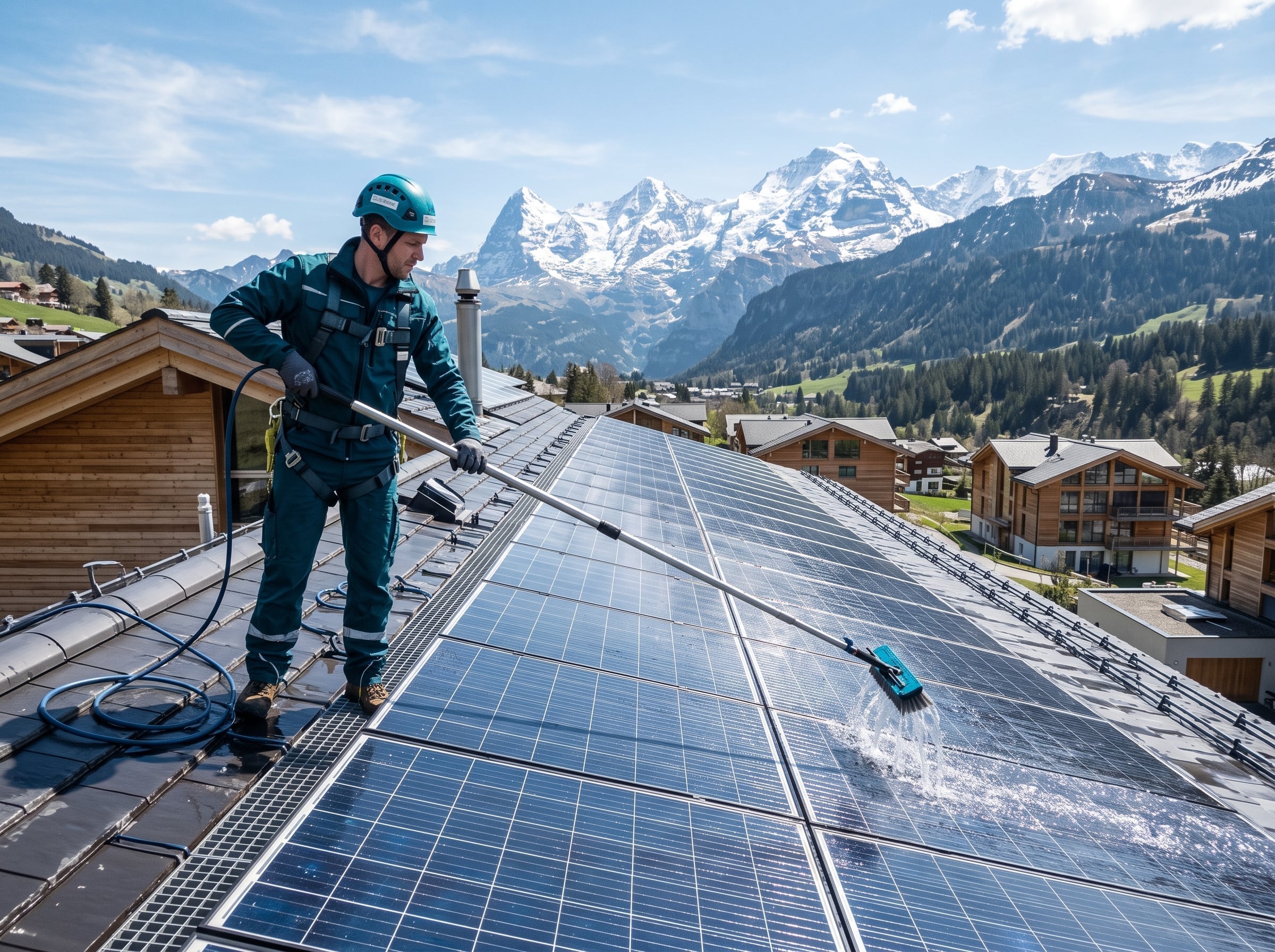
Soft brush and carbon-fibre pole at low pressure: no micro-scratches on the anti-reflective coating and no tired seals.
A module veiled with pollen or soot produces less without anything flagging it: cleaning gives that output back, up to 25% on a heavily soiled installation.
Most pitches are handled from the ground, with a telescopic pole up to 12 m; when access demands it, we go up onto the roof, safely.
Houses, resort chalets, second homes, farms and company roofs, whatever the surface area.
In the valley one visit after the pollen season is enough; at altitude we add a second one before the first snow.
Photos of the roof before and after, and output that picks up within days.
No detergent on your roof, so no runoff into the gutters, the garden or the water butt.
Quote within 24h and an appointment matched to your exposure, the pollen season and the opening of the house.
Driving time from Ugine, where our base and our demineralised water tank are.
Is your installation elsewhere in Savoie or Haute-Savoie? Send us a photo of the roof, the number of modules and the commune: we reply within 24h.
FAQ
Why, when, how and from where: what owners ask us before entrusting us with their roof.
Yes, as soon as the installation ages or sits near trees, a road or wood heating. A film of pollen or soot cannot be seen from the garden, but it filters the light before it reaches the cells. On a heavily soiled installation, a wash recovers up to 25% of output.
No, and that is the most stubborn myth. Rain dilutes dust but leaves conifer pollen, which is oily, and limescale, which dries into rings. Melting snow does worse: it drags limescale from the massifs, needles and debris across the glass, and the night frost glues them on.
We work with demineralised water and a soft brush, at low pressure. High pressure can tire the seals and the frame, and a detergent leaves a film that attracts dust again sooner. Pure water dries on its own and leaves nothing behind: it is the method most manufacturers ask for.
Both, depending on the pitch, the height and the access. The telescopic pole fed with pure water reaches 12 m from the ground, which covers many houses and barns. When the layout requires it, we go up onto the roof, safely and without walking on the modules.
In the valley and by the water, one visit a year after the pollen season is usually enough. At altitude we recommend two: at the end of spring once the roof is clear, then in early autumn before the first snow.
On a quote, with no obligation. Send us a photo of the roof, the number of modules and the commune: that is enough to judge the pitch, the access and the type of soiling. You get a detailed proposal within 24h, and we do not charge for travel within our area.
Tell us what you need in a few words. We'll get back to you with a clear, no-obligation quote within 24 hours.