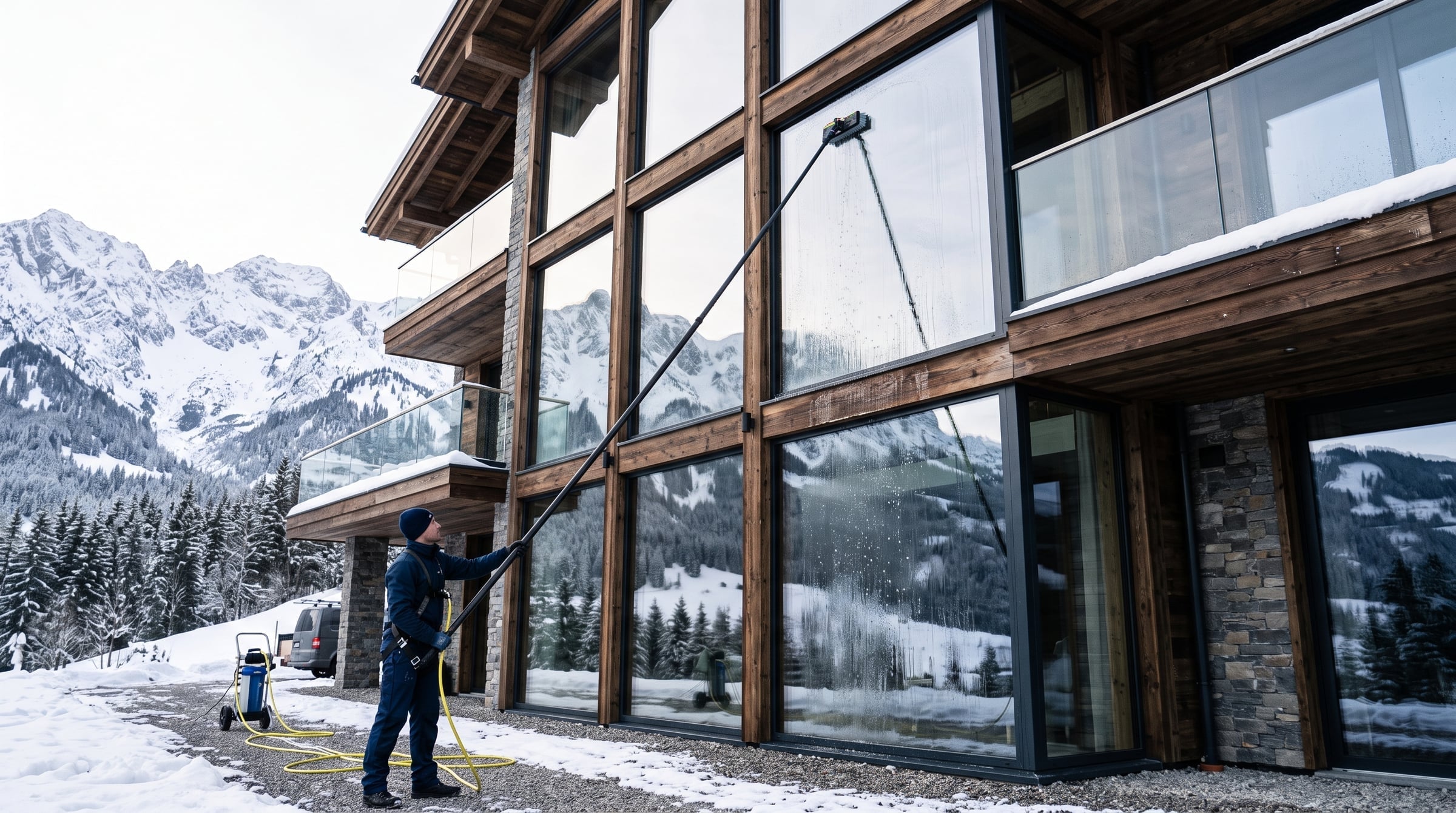
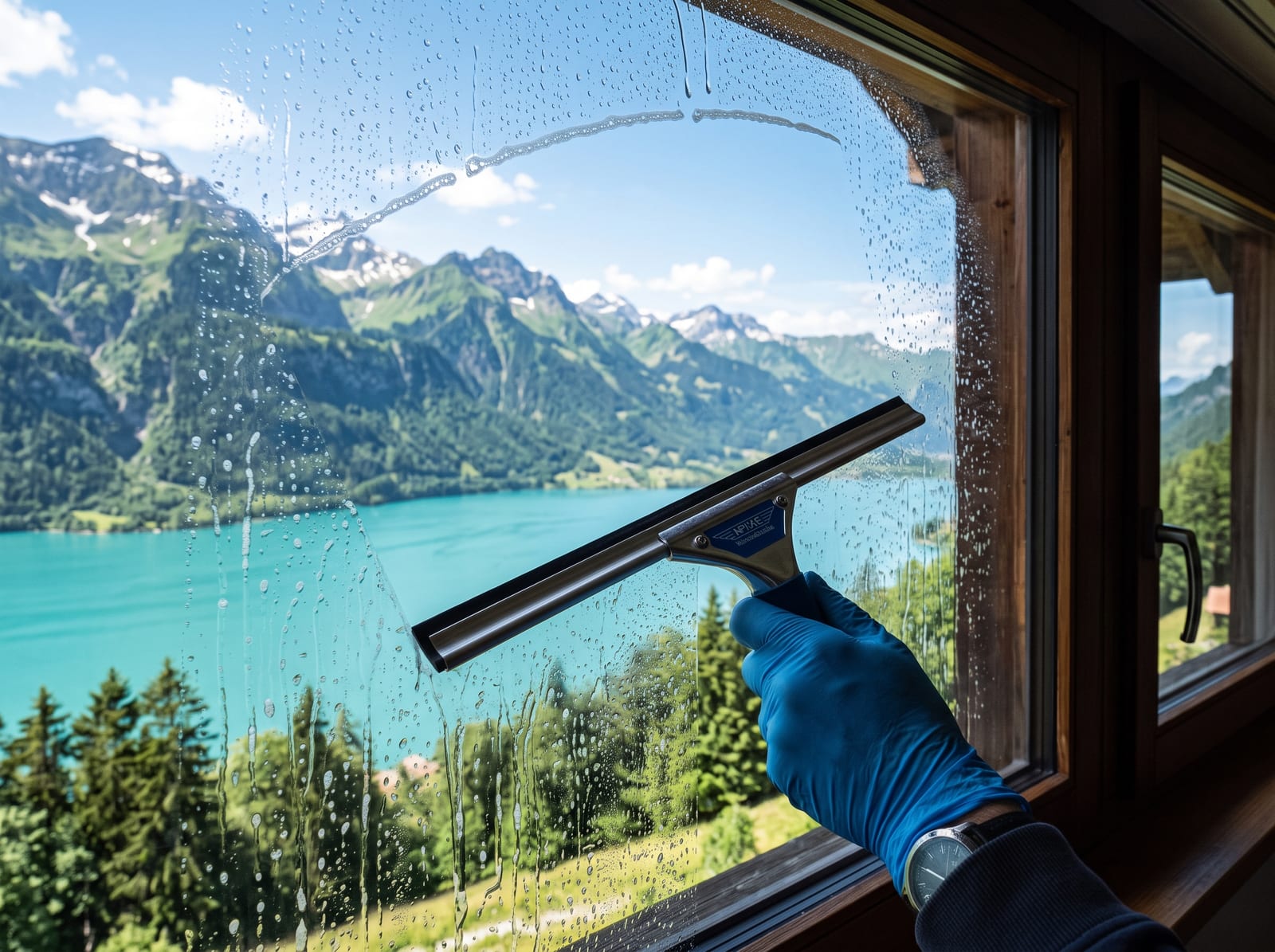
Window cleaning, the trade
Every kind of glazing, the method and the kit, across Savoie and Haute-Savoie.
Learn more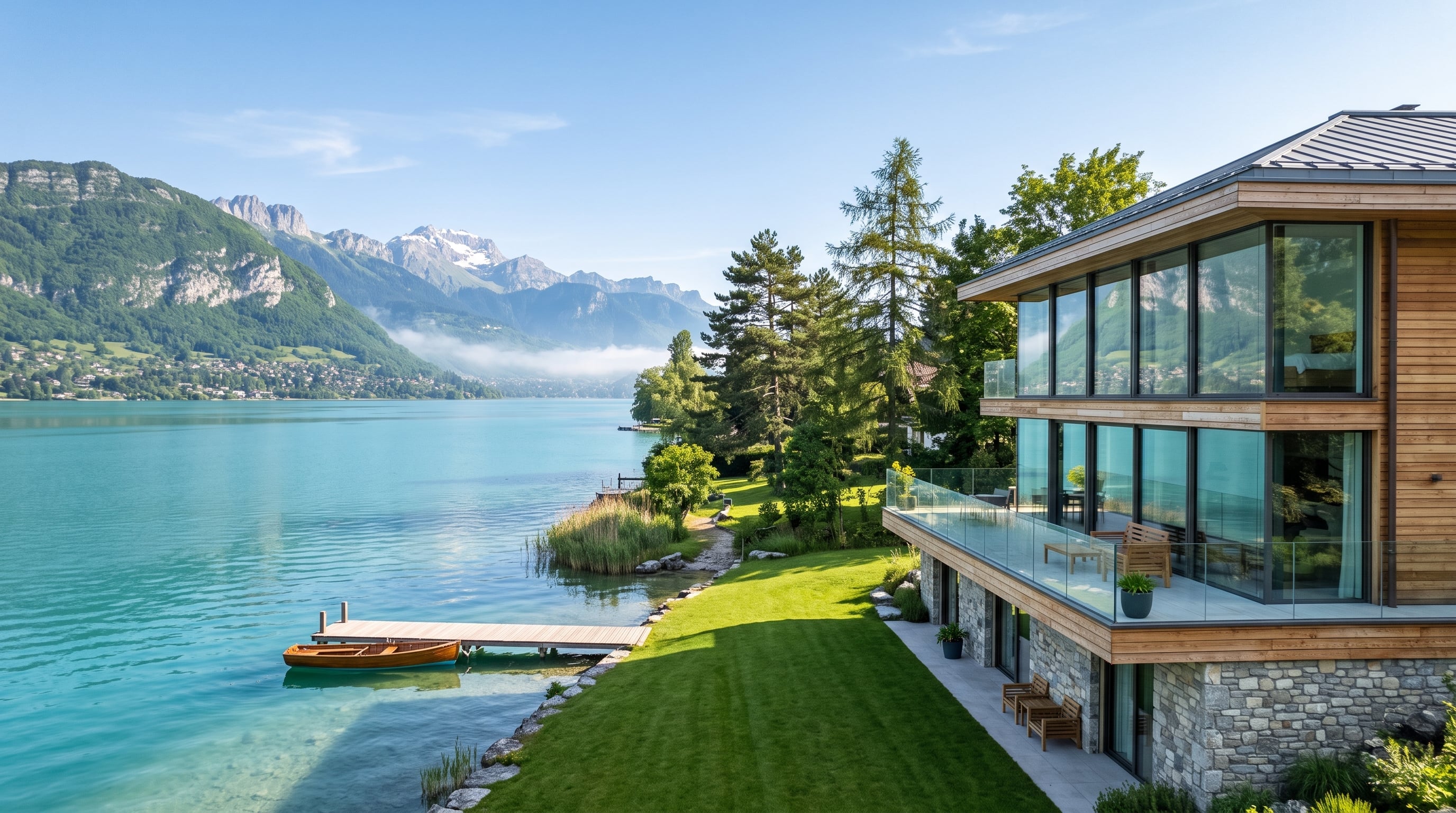
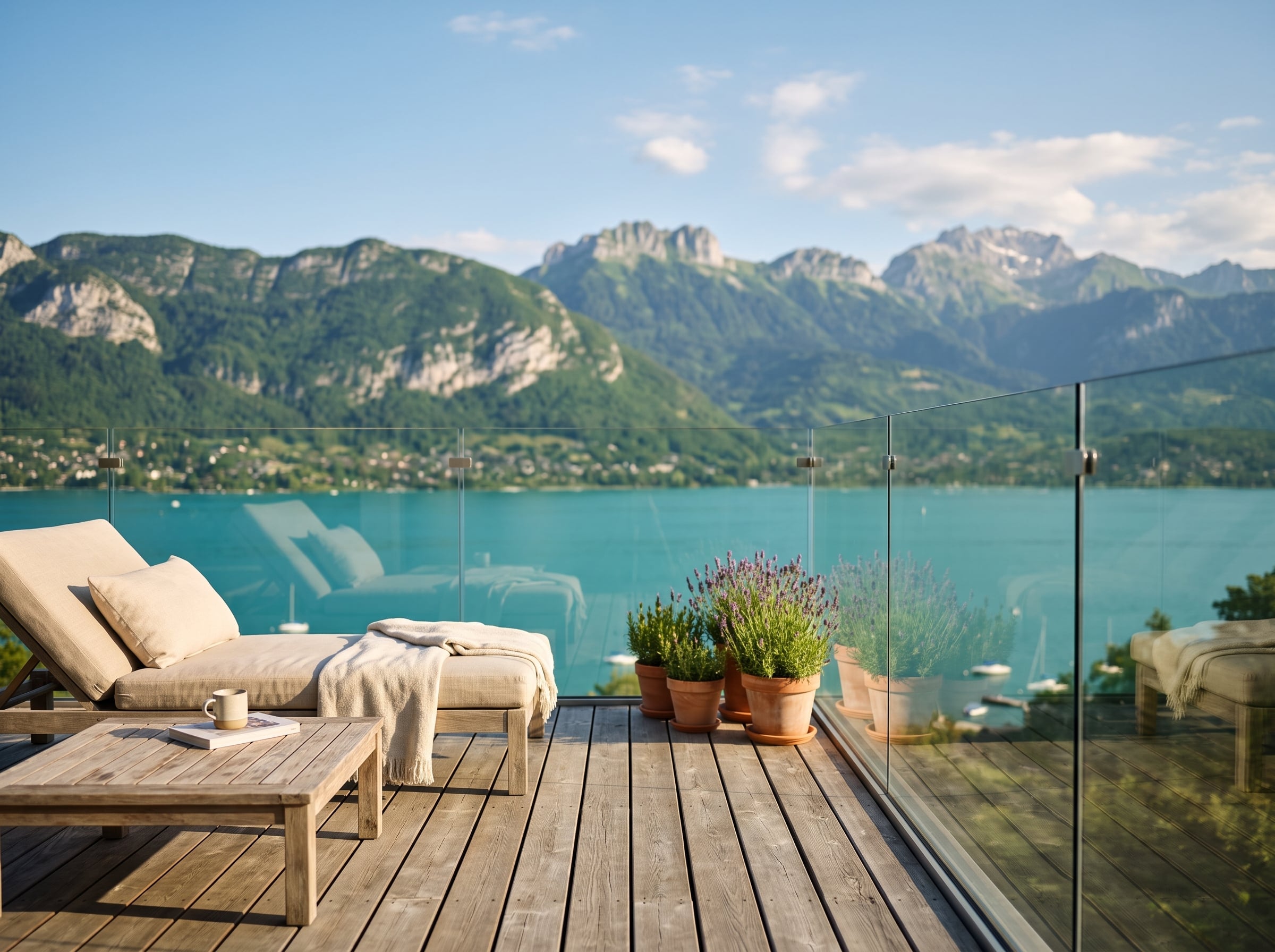
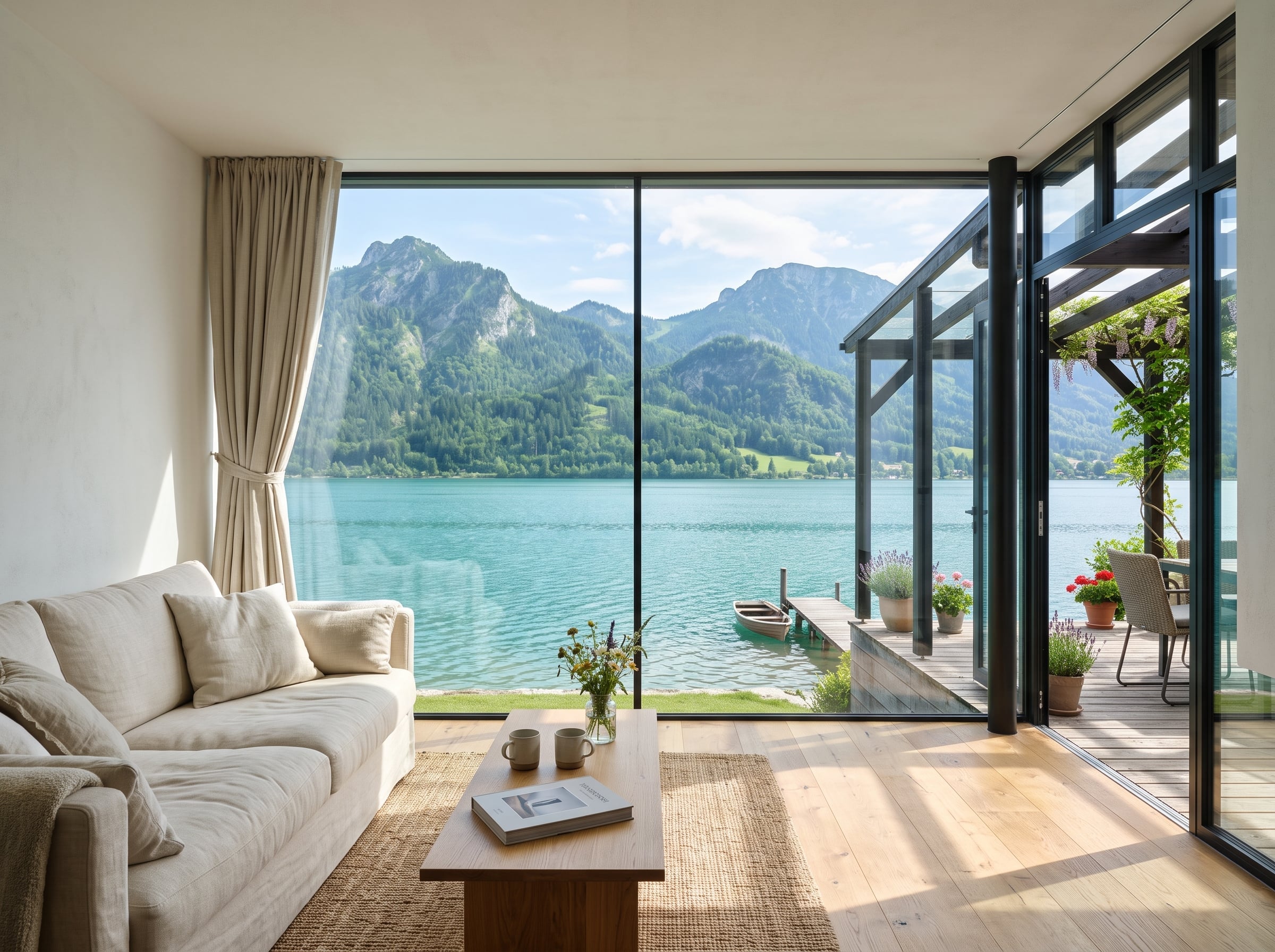
By the lake, the view reaches you through glass. We wash bay windows, verandas and glass panels with pure water on both shores, from Veyrier-du-Lac to Sevrier and Saint-Jorioz.
The road round the lake runs some forty kilometres, and the two shores have little in common. On the east side houses hold onto the slope, between the road and the water, from Petit Port down to Angon: that is where the largest glazed surfaces of the area are concentrated. On the west and southern side the buildings breathe more: Sevrier, Saint-Jorioz, Duingt, then the hamlets along the shore. What they share fits into one line: here you buy a view, and that view comes through glass. Lake air, for its part, works against it. Morning mist dries into rings, automatic watering leaves limescale along the foot of the bays, pollen from the wooded slopes of the Semnoz and the Tournette sticks from April onwards, and June midges settle on the panes closest to the reed beds. Our base in Ugine is twenty minutes from the south of the lake: we take one shore in the morning and the other in the afternoon, with poles and demineralised water.
From Annecy-le-Vieux to Talloires, houses settle on the slope, between the road and the water, often below the level of the carriageway. Corner bays in Albigny and Chavoires, roof lights over towards Chavoire and Les Pensières, balustrades hanging above the garden in Menthon-Saint-Bernard and in Angon: glazing here takes up a share of the wall you see nowhere else around the lake. The lower facade, the one invisible from the street, catches the morning sun and the mist rising off the water, and it is the one that asks for work first.

On the other side the buildings spread out: Létraz and Cessenaz in Sevrier, la Plage and Tavan in Saint-Jorioz, the old village of Duingt, then Chaparon and the southern hamlets. Many of these houses are lived in only part of the year, and their windows sometimes wait two summers in a row. This sector is our immediate neighbourhood: twenty minutes from Ugine, close enough to fit in a short visit just before you arrive rather than one heavy overhaul every five years.


A living room open onto the lake is judged sitting down, against the light: that is where we check the finish, room side and terrace side, before we leave the house.
Terraces here replace the railing with glass so that nothing hides the landscape: we wash both faces, clamps and profiles included, even where the panel overhangs the garden.
Almost horizontal glazing takes everything the garden tree drops on it, sap included. It is worked from above, brush first then rinse, with no product that attacks the frames.
A glazed gable over two floors, an upstairs window above a bank, a stairwell transom: we get to 12 m with a pole fed by pure water, with nothing to park across the corniche road.
You arrive for a weekend in May or for the whole summer: we come a few days ahead, so the first thing you see on walking in is the lake and not six months of deposit.
Shops in Sevrier, in Saint-Jorioz or by the harbour in Talloires: we come before opening, while the pavement is still empty, and go back over the glass door that the day marks first.
More and more roofs by the lake carry them: a demineralised-water rinse gives back the output that pollen and dust take away, without scratching anything.
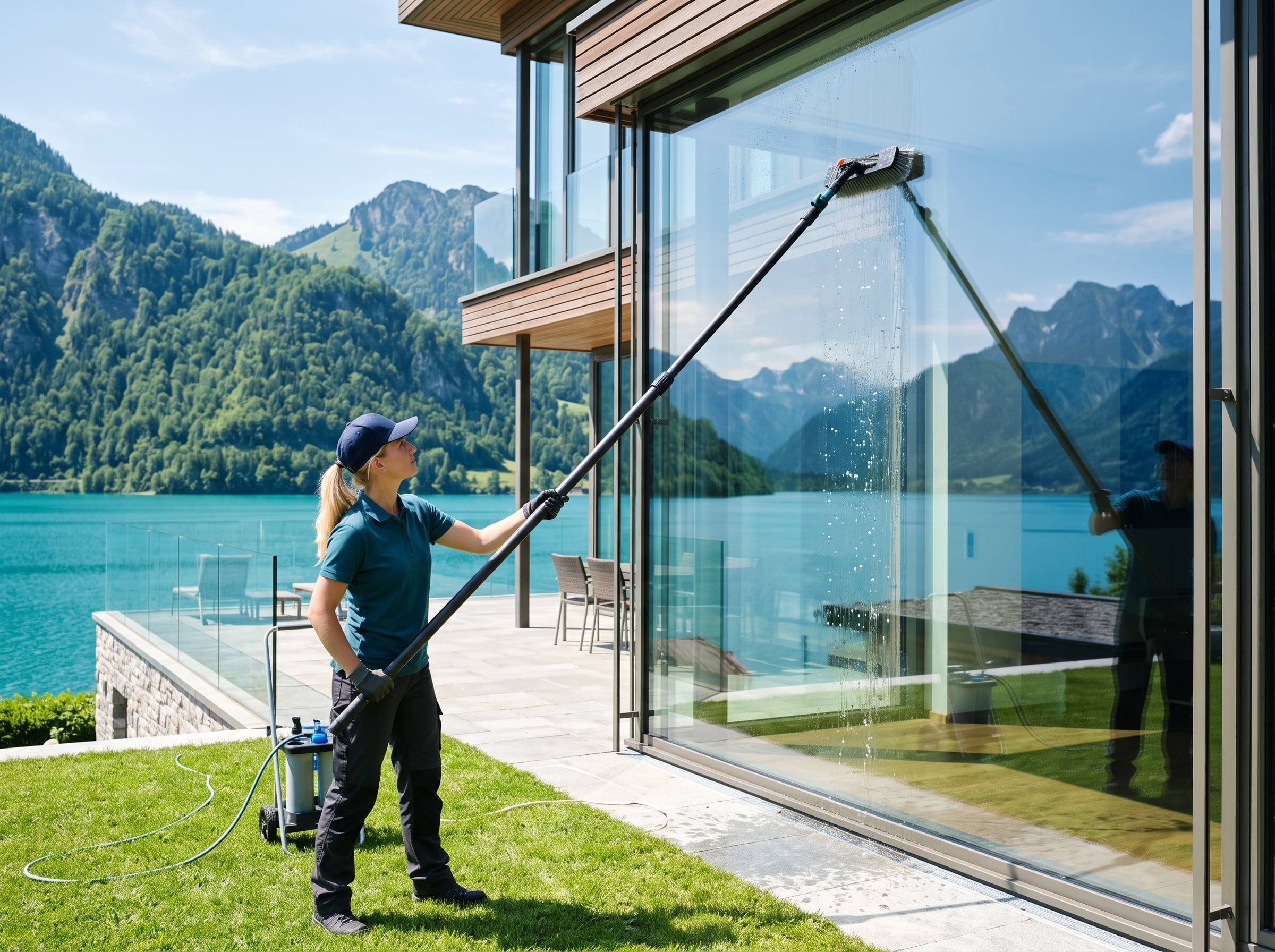
Twenty minutes separate us from the south of the lake, forty from Veyrier-du-Lac: appointments on the same side are grouped, and we still come out for a single house.
It evaporates without leaving the slightest salt: no ring comes back with the first sun on a south-facing bay, and the frames do not dull visit after visit.
Many houses here stay closed for part of the year: we work with a key left with a neighbour or a caretaker, and the photo report goes out the same day.
Cleaning the windows of a private home counts as a service à la personne, main residence and holiday house alike: you pay one half, the Urssaf takes the other at the moment of payment. Only properties that are let out stay outside the scheme.
-50%
of your invoice, taken off at the moment you pay.
How it worksFor private clients only, for work carried out in your own home, up to the annual ceiling. Under article 199 sexdecies of the French tax code.
The round is organised shore by shore: jobs on the same side are grouped into one day, and the time slot is confirmed the day before.
Is your house in Bluffy, in Entrevernes or up on the slopes above Leschaux? The lake road goes there too: just tell us the hamlet.
FAQ
What owners on both shores ask us most often.
Yes, with no minimum area and no minimum invoice. We simply group appointments by shore to cut down on driving: if a neighbour in Sevrier or Veyrier-du-Lac asks in the same week, everyone waits less. The quote is free, it reaches you within 24 hours, and it breaks the surfaces down by type of glazing instead of naming one overall price.
That is true of many properties on the lake, and nothing about it is a problem. Nobody has to be there for the outside part: all of it is done from the garden or the terrace. Indoors, a key left with a neighbour, a caretaker or an agency is plenty. We settle the date, we tell you what we find on site, a seal coming away or water getting into a veranda, then we lock up and put the key back where we found it.
Yes, as long as you use the house yourself: the scheme does not distinguish a main residence from a holiday home, and the immediate advance halves the invoice at the moment of payment. The limit is letting: once the property is rented out, anything connected to that activity stays outside, and we put it on a separate invoice.
Yes, and by the lake that is often the bulk of the job: glass balustrades, terrace panels, bioclimatic pergolas, verandas, pool enclosures, outdoor mirrors. These surfaces are priced per square metre rather than per window, because a three-metre panel has nothing in common with a standard pane, neither in access nor in time spent.
Two visits cover the year for most houses. The first in April or May, once the pollen from the slopes has come down and just before the garden is in use again. The second in September, when the crowds have gone and the summer has left its film of dust and water marks. South-facing frontages and those caught by automatic watering often call for a third.
Tell us what you need in a few words. We'll get back to you with a clear, no-obligation quote within 24 hours.