High-level windows, the method
Pole, pure water and height: how we work, across Savoie and Haute-Savoie.
Learn more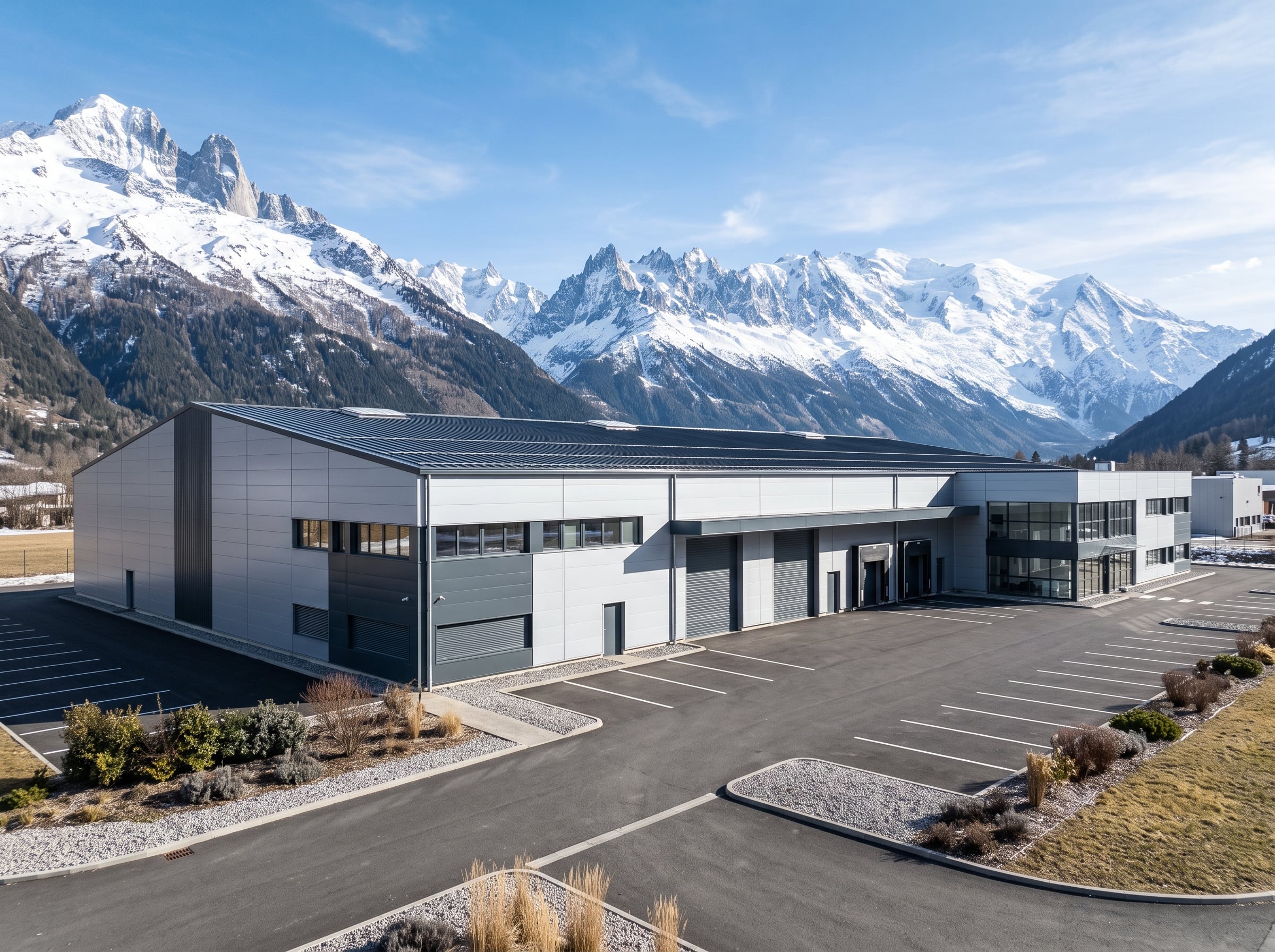
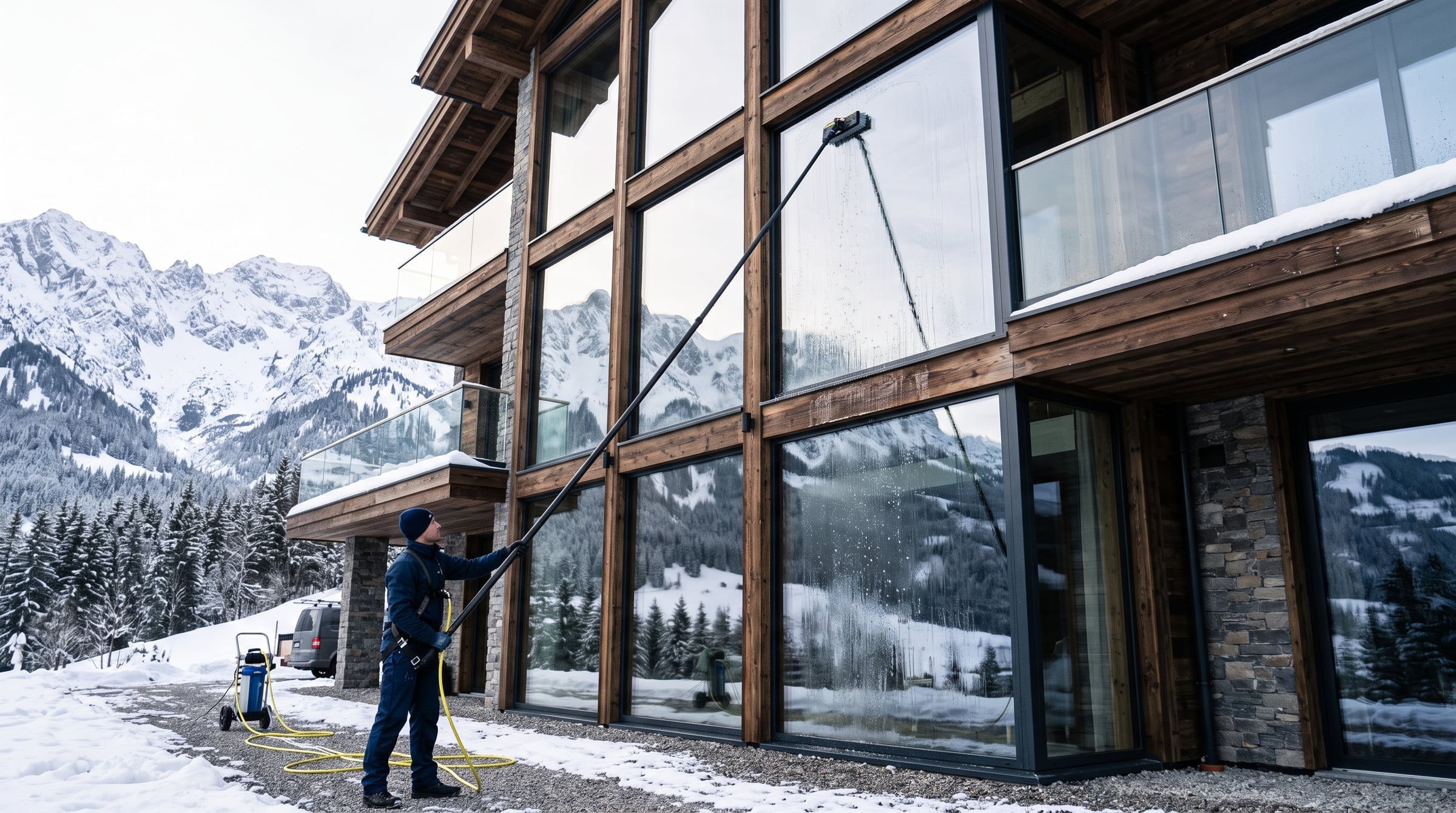
Workshops, office buildings, agencies and shopfronts: we clean their glass without leaving the ground, up to 10 to 12 metres high, using a telescopic pole fed with pure water, with neither cherry picker nor scaffolding. We come from Ugine via Megève and Sallanches, on a round that groups your addresses together.
From Sallanches to Bonneville, the Arve and the motorway hold the valley floor, and the business parks line up between the two. The décolletage workshops of Cluses, Scionzier, Marnaz and Thyez, specialists in precision bar turning, often share the same layout: a windowless production hall and, on the street side, an office block fully glazed over one or two storeys, set above the reception or a delivery canopy. Bonneville adds its office buildings, agencies and public offices; Sallanches and Cluses, their shopfronts and showrooms along the road. All that glass picks up the same dirt: the grey film the valley air leaves during the cold months, salt and spray from the road, and the fine dust coming out of the workshops that the damp air of the Arve sticks to the panes. We wash it from the ground, with a telescopic pole fed with pure water, with no cherry picker, no scaffolding and no need to close. Our base is in Ugine: we come up via Sallanches in about an hour and group the valley's addresses on one round, early in the morning, in the evening or on Saturdays.
In Cluses, Scionzier, Marnaz and Thyez, a workshop is read from the street: the office block is the only glazed part of the building, and it is the part customers, hauliers and job applicants see. Its windows sit high, often above a canopy or a loading bay where no ladder will stand, and they catch the fine metal dust the extraction systems release, mixed with the damp air of the Arve that sets it into a dull film. The pole starts from the car park and reaches at an angle over the canopy, up to the top-floor glazing; the glass door of the reception and the hall glazing are done in the same visit. We come before the morning shift or on Saturday, when the yard is free of lorries. Inside, we look after the offices, the meeting room, the changing rooms, the canteen and the toilets; the production hall and the machines stay outside our scope.
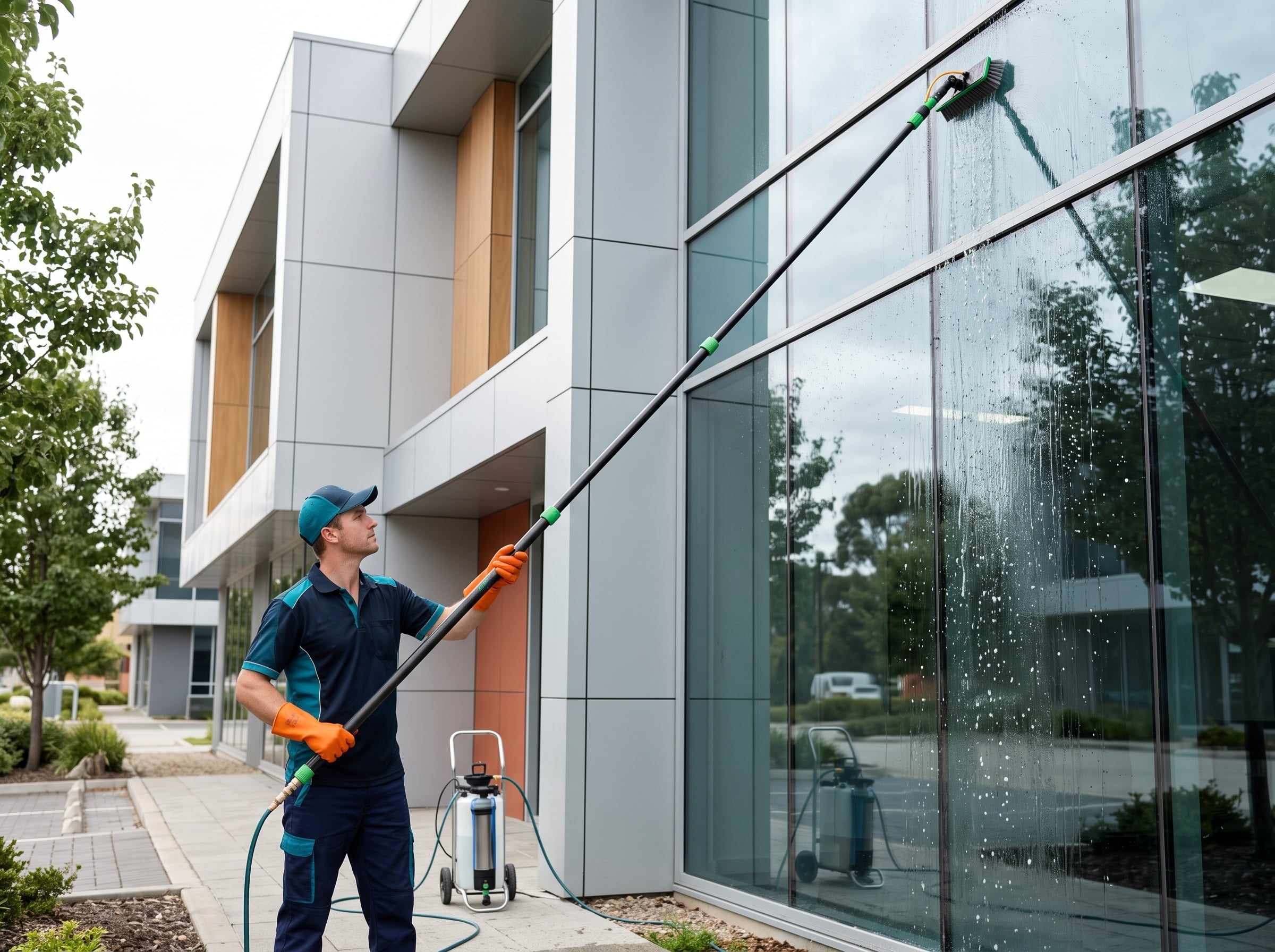
As a sub-prefecture, Bonneville gathers most of the valley's service sector: public offices, the court, banks, insurers, estate agencies, medical and consulting practices, in buildings of two to four storeys between the centre and the business parks at the edge of town. The ground floor is a shopfront or an agency door, the upper floors are offices whose windows do not always open, and the stairwell is often a single sheet of glass. Traffic on the roads through town leaves its particles on the façades that line them, and in spring the pollen of the Arve poplars sticks to exposed glazing. We wash the upper floors from the pavement or the courtyard with the pole, and the shopfront before 9am, without disturbing reception or blocking a parking space for a cherry picker. Office cleaning in Bonneville is planned with the building manager or the managing agent, with a report after every visit.
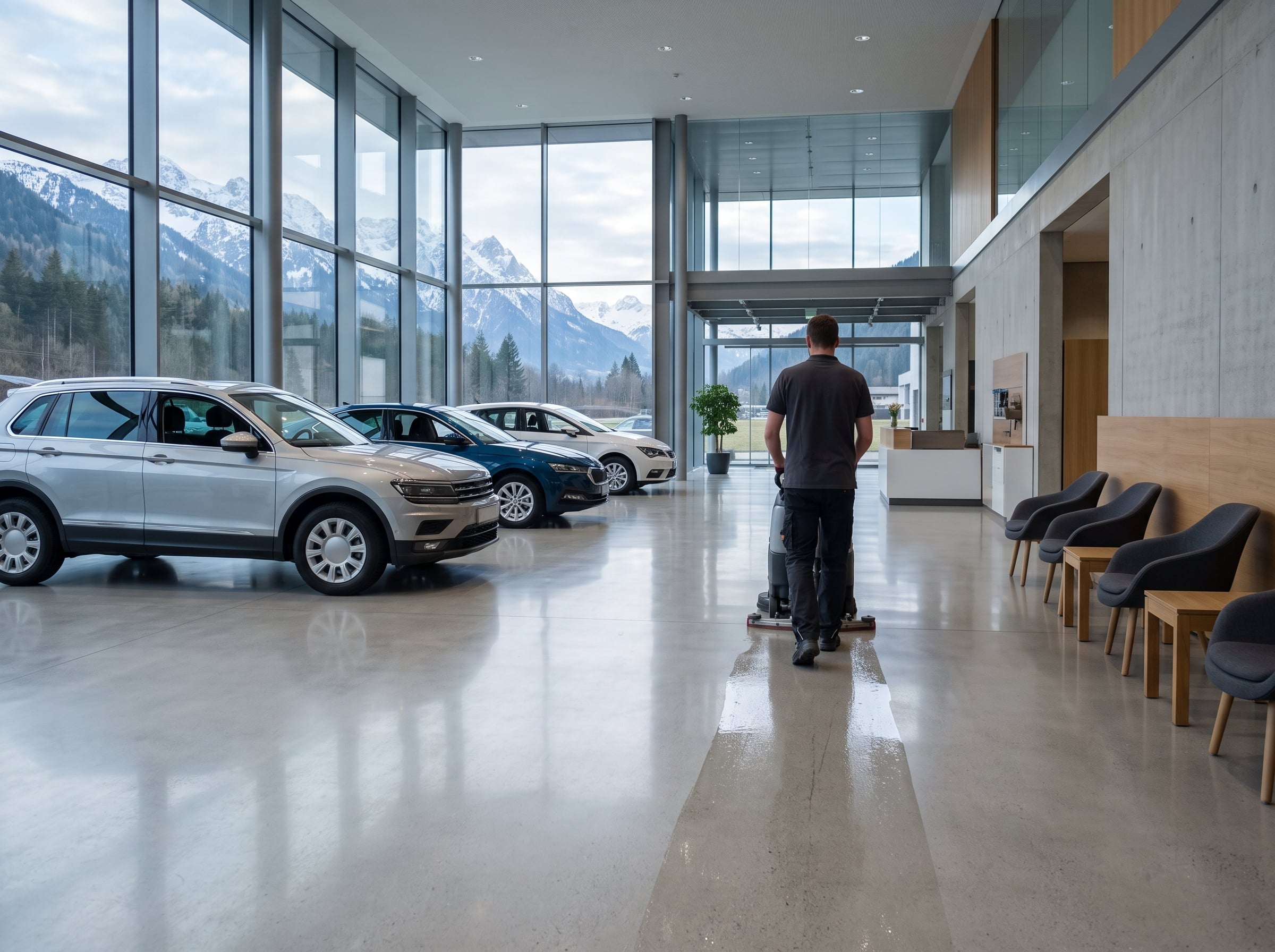
Along the road between Sallanches and Cluses, the retail parks line up car dealerships, sports shops, supermarkets and kitchen or joinery showrooms. Their shopfronts rise four to six metres, topped with a canopy and a sign, and all of it faces the road: winter grit and salt, spray from lorries and dry summer dust settle on the glass before the first customer arrives. We wash shopfront, canopy and sign from the car park, with the pole and pure water, before opening, with no cherry picker and without closing the shop. Sallanches is our first stop as we reach the valley; Cluses follows close behind, which lets us cover several shops in one morning, then come back on fixed dates, every quarter or before a sales event.
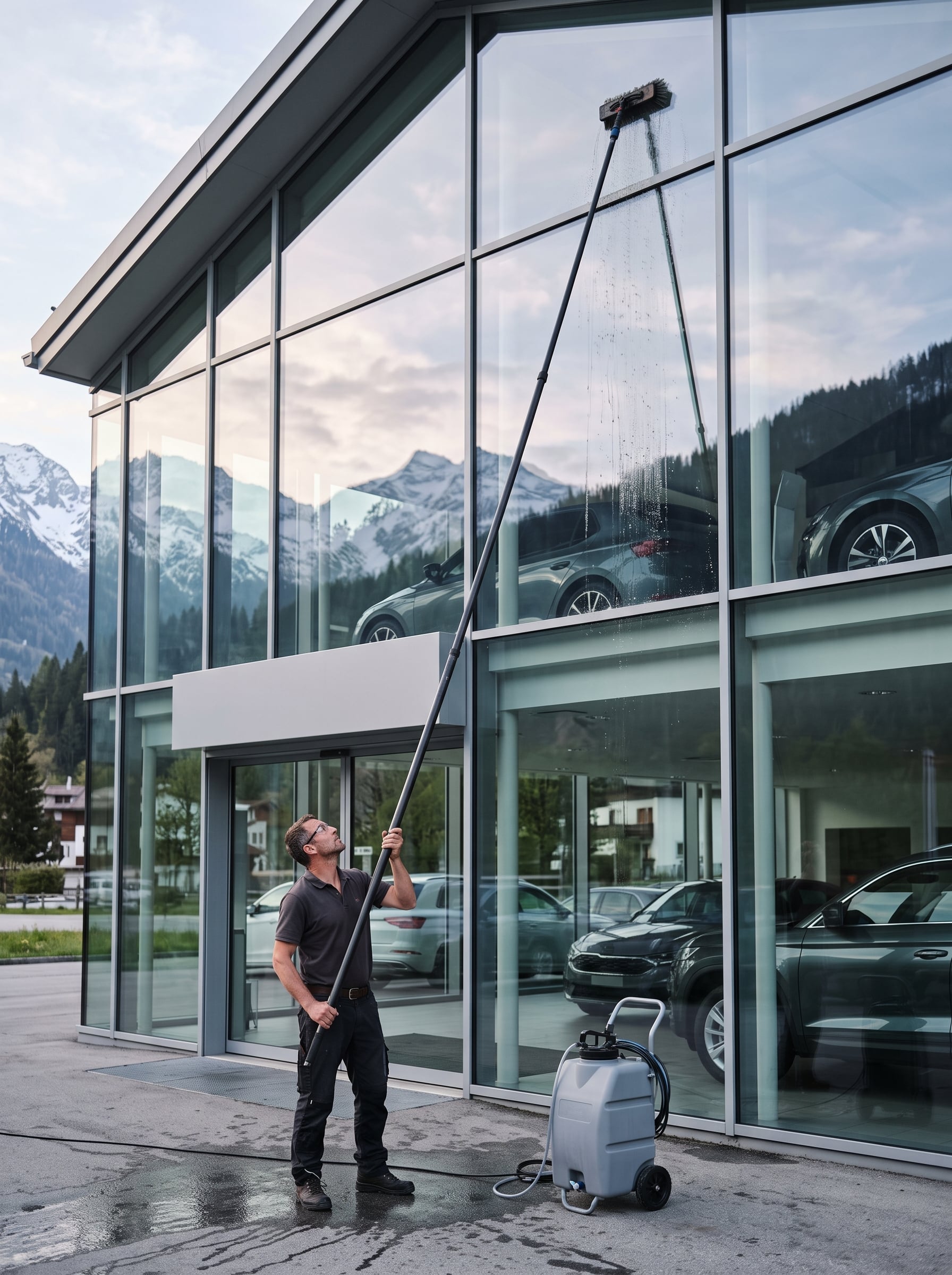
Glazed strips on workshops, office floors, stairwells and transom lights, washed from the ground with a carbon-fibre telescopic pole.
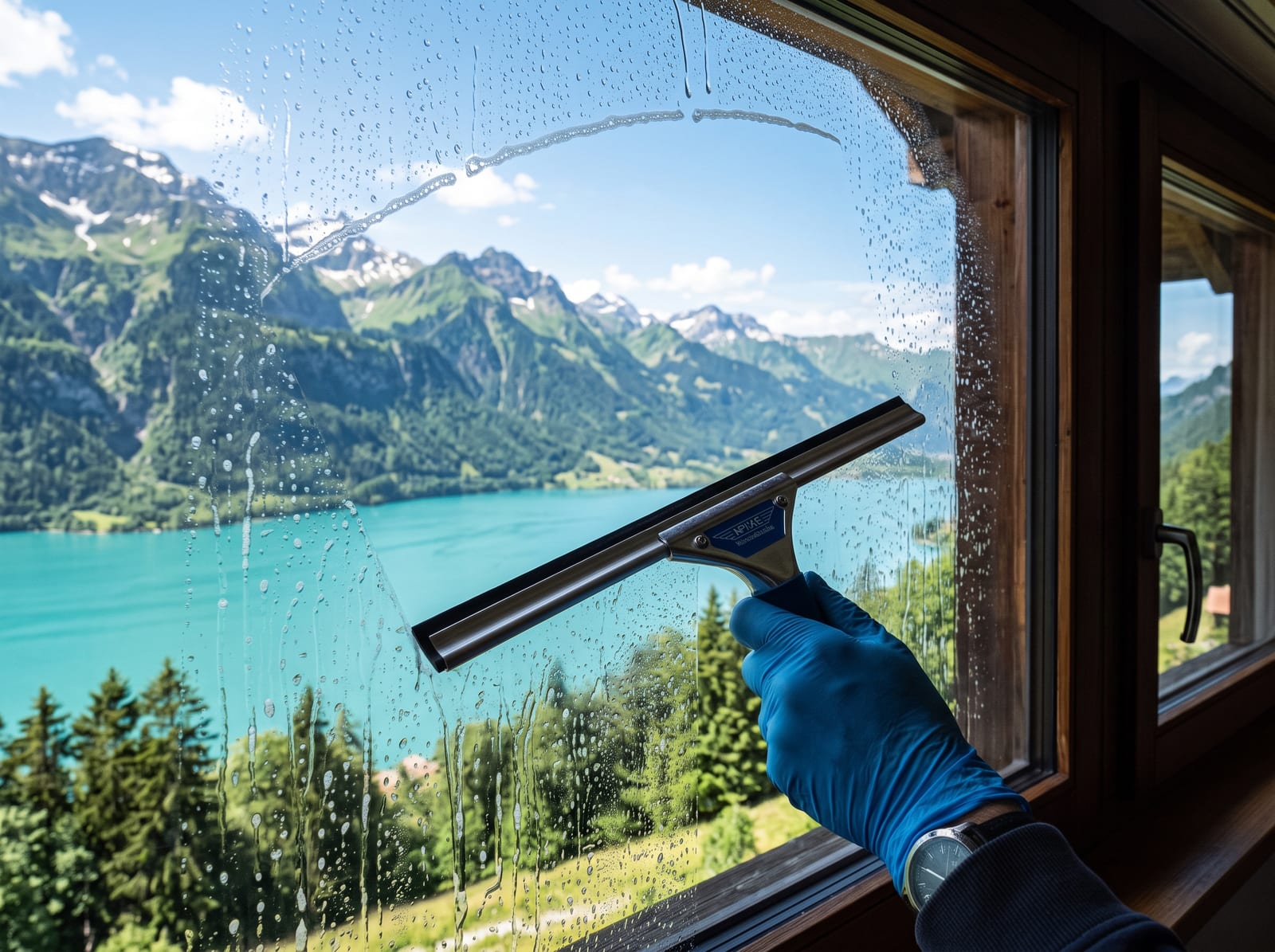
Demineralised water that dries without leaving salt or rings: no detergent on seals, frames or joinery.
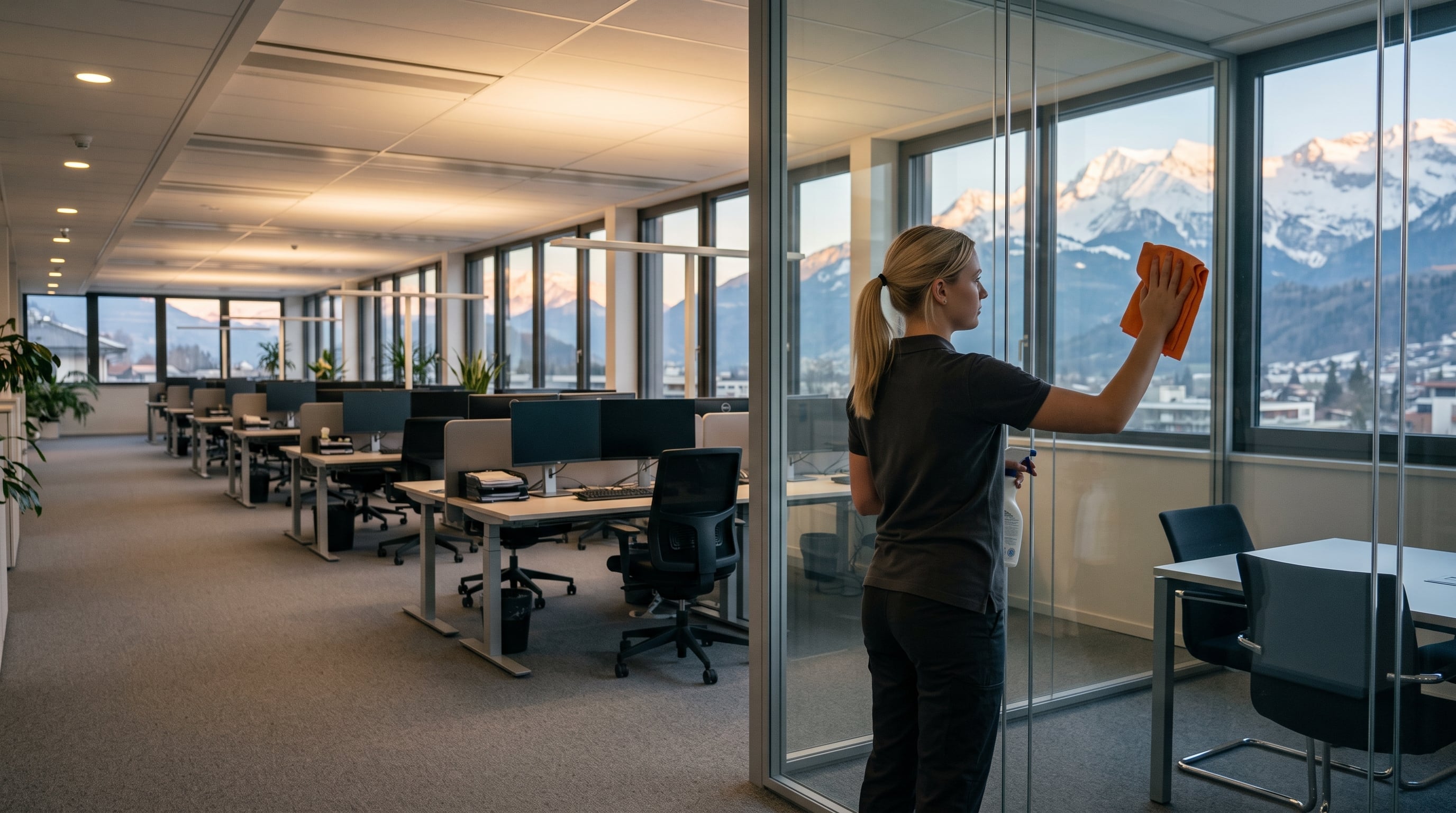
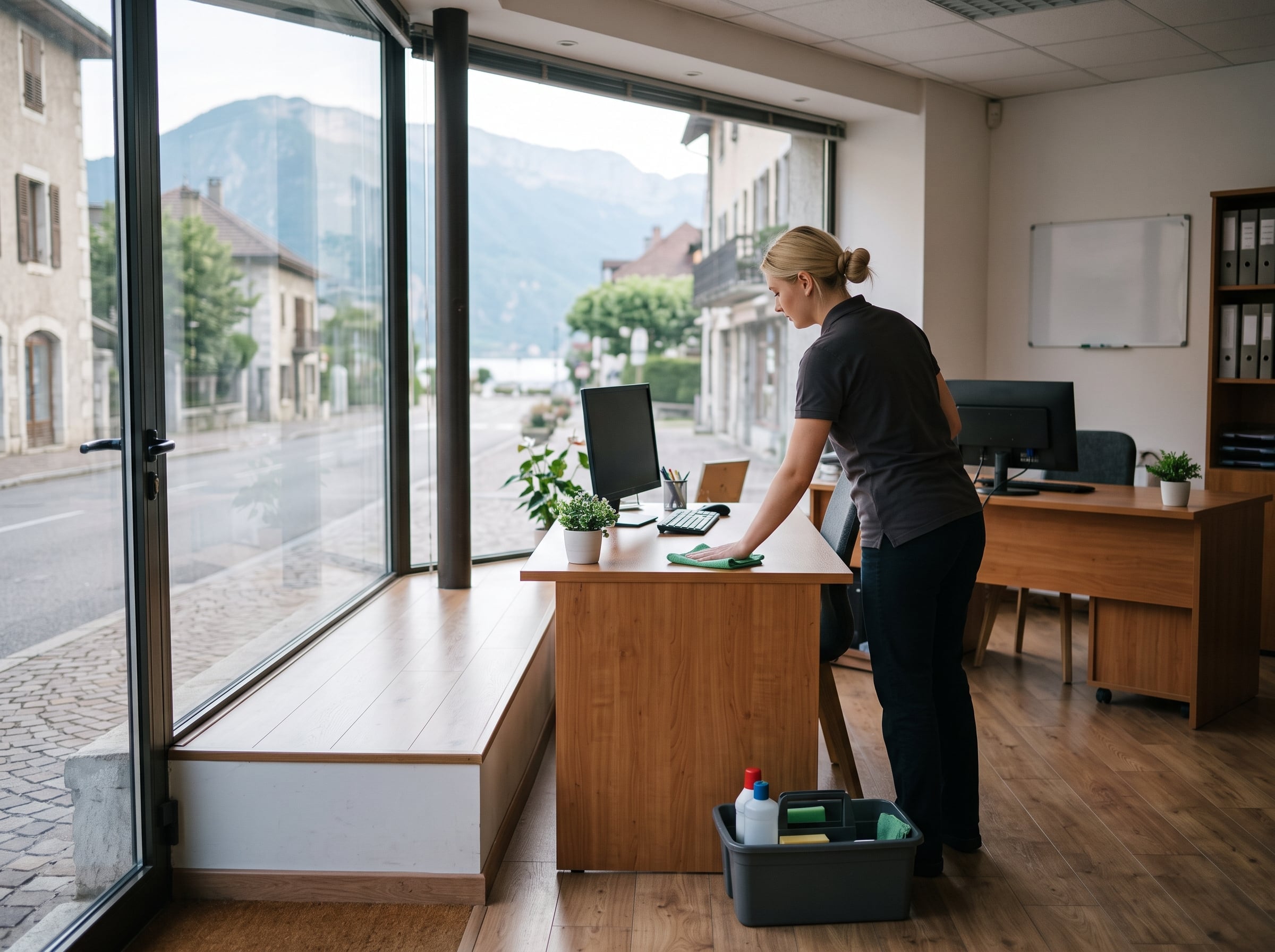
Offices, meeting rooms, reception, changing rooms, canteen and toilets, on a regular contract when several addresses in the valley share the round.
Shop, dealership and showroom fronts made spotless before opening, without closing and without a cherry picker.
New or refurbished premises: labels, paint splashes, silicone marks and protective films removed with pure water, before the keys are handed over.
A single visit, a visit every quarter or a schedule set around your audits and sales events, with a report.
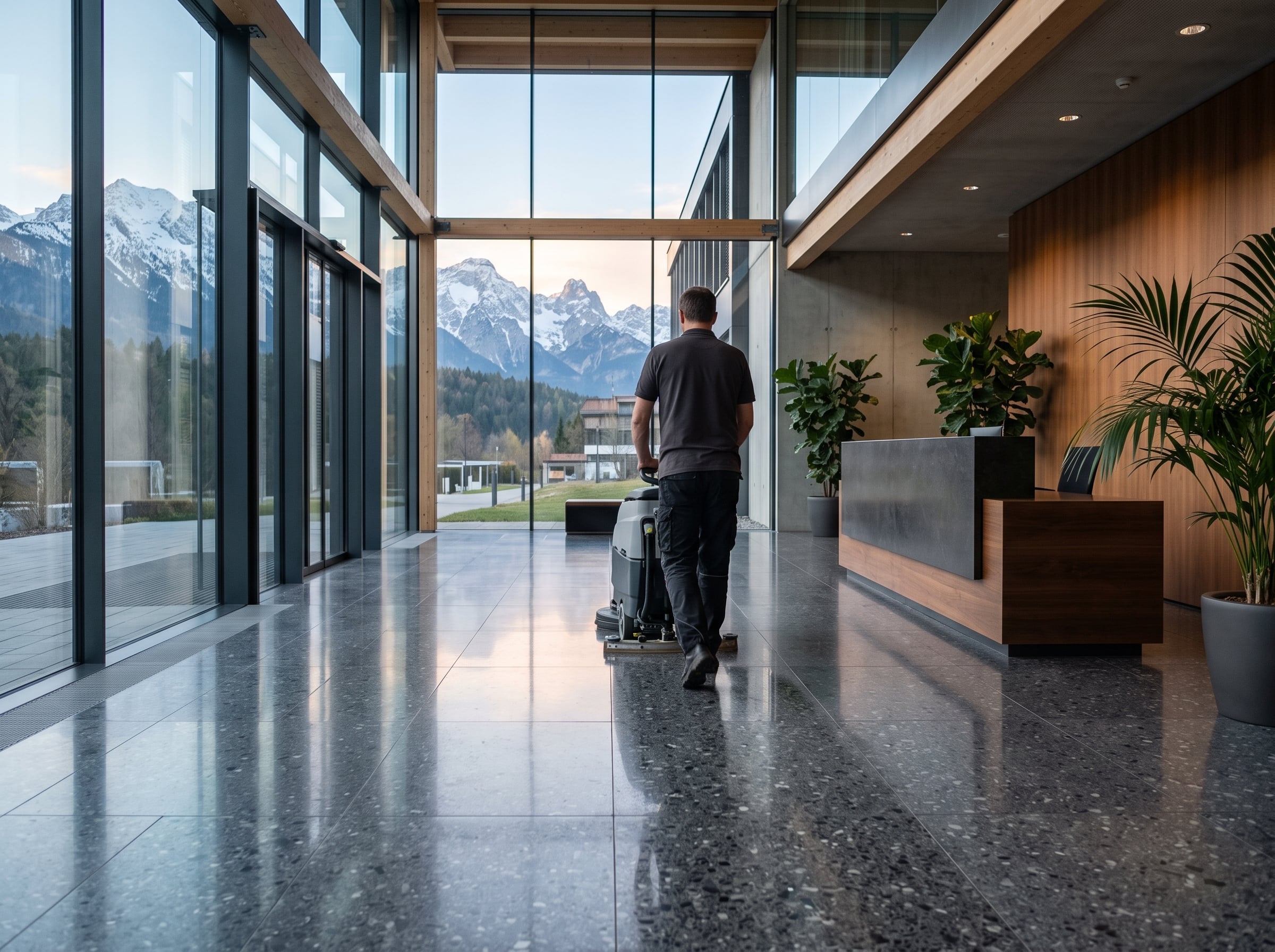
No lift to hire, no scaffolding, no parking space to block off: the pole does the job up to 12 metres and the site stays open.
Appointments in the valley are grouped on the same day: your slot is confirmed the day before, and we also come out for a single building.
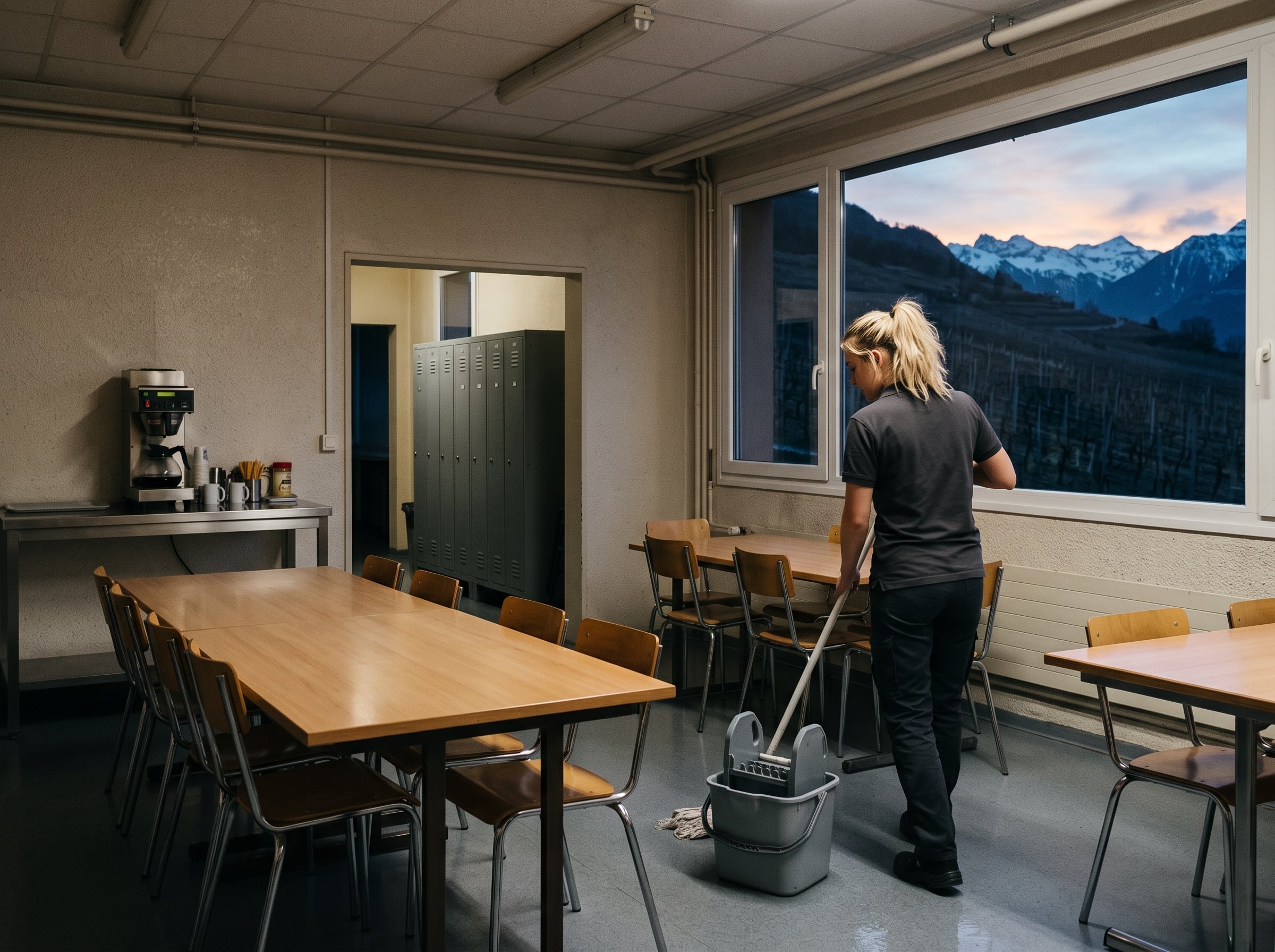
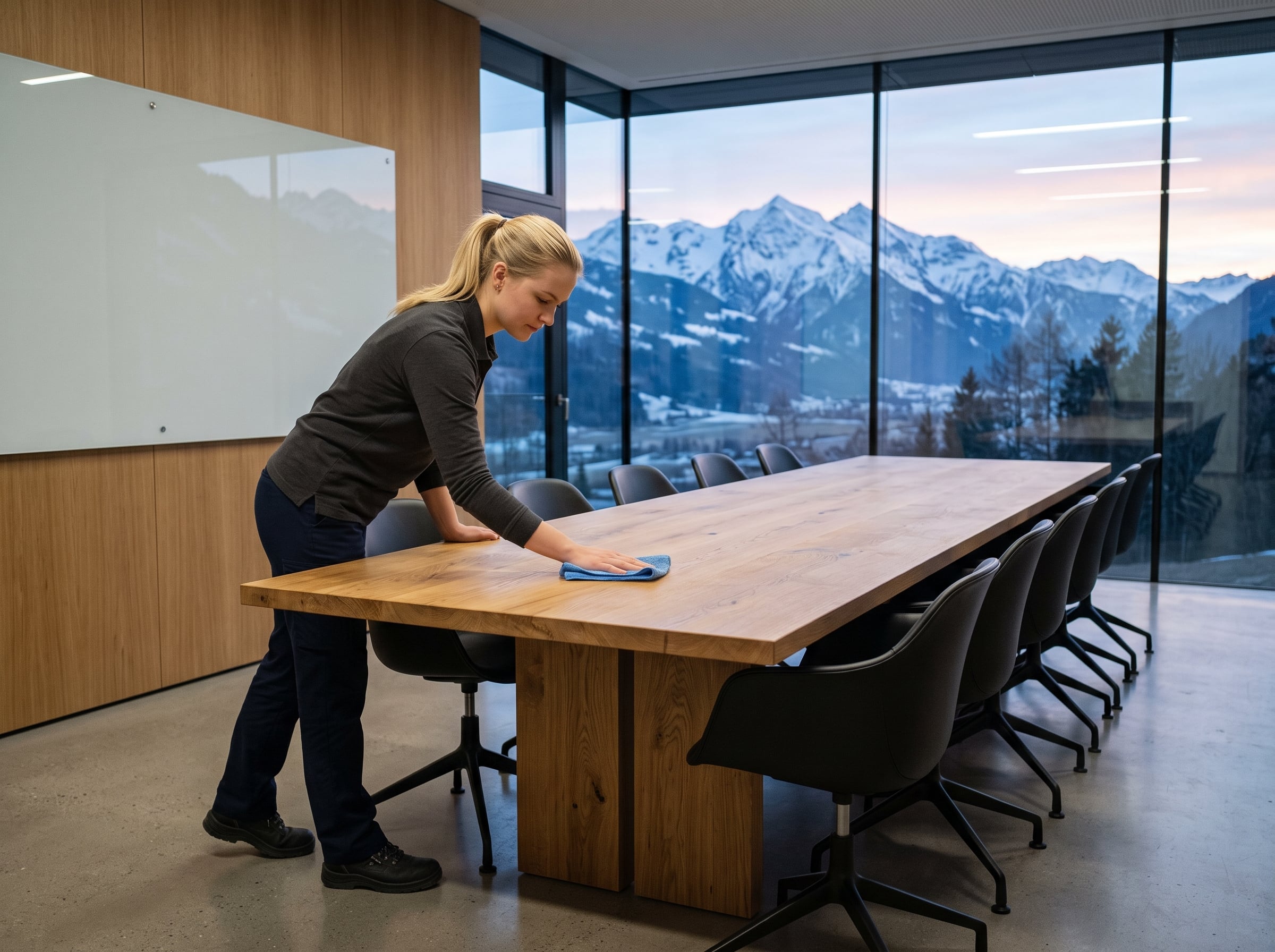
In the morning before the shift, in the evening after closing or on Saturday, between 7am and 8pm: the same team every time, and a report sent afterwards.
Driving times from our base in Ugine: via Megève and Sallanches for the upper valley, via Annecy for Bonneville. Addresses for the same day are grouped together, and we confirm your time the day before.
Is your building in Magland, Marignier or Saint-Jeoire? The round goes there too: send the address and a photo of the façade and we reply within 24 hours.
FAQ
Six points site managers and business owners ask us about before a first visit.
Yes. The Arve valley is part of our rounds, on a simple principle: we group several addresses on the same day so that the journey does not weigh on your invoice. Allow an hour to Cluses via Sallanches, a little more for Bonneville. A single building is still possible: we fit it into the nearest round and give you the date in advance.
No, as long as the glazing is no more than 10 or 12 metres from the ground, which covers nearly all the workshops, shopfronts and office buildings in the valley. Fed with pure water, the telescopic pole reaches the top-floor glazing from the car park or the pavement. Beyond that, or when an obstacle stops us getting into position, we say so on the quote rather than improvising on site.
On the façade, yes, entirely, from outside. Inside, we take care of the offices, reception, meeting rooms, changing rooms, canteen and toilets. The production hall, the machines and areas under safety instructions remain outside our scope: that is a rule, not an exception.
Two visits a year are enough for most workshops and office buildings: one in spring, once the winter film and the pollen have settled, the other in autumn before the cold months. Shopfronts and showrooms along the road rather need a quarterly rhythm, plus a refresh before a sales event or an important visit.
Yes, when several addresses in the valley share the same round: that allows a regular visit, from once to several times a week, between 7am and 8pm or on Saturdays, always by the same team, with a report at the end of each visit. For a single site, we first suggest a monthly or quarterly rhythm, then adjust as other businesses in the area join us.
Send us the address, a photo taken from the street and the approximate height of the glazing, or the number of storeys. We reply within 24 hours with a quote broken down by surface and type of glazing and, if the building calls for it, we come to see it on the next round before committing.
Tell us what you need in a few words. We'll get back to you with a clear, no-obligation quote within 24 hours.